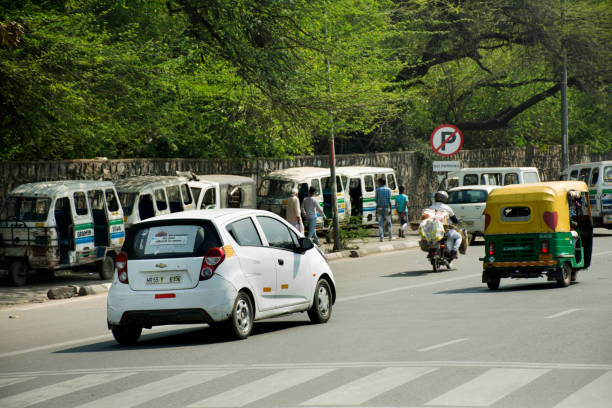
A few years ago, if someone said electric cars would become normal in India, most of us would probably laugh a little. I remember having a chai discussion with my cousin around 2018 and we both agreed that EVs are “good for foreign countries, not for Indian roads.” Fast forward to now and suddenly I see them in my colony parking lot, outside malls, even standing quietly next to autos at traffic lights.
It didn’t feel gradual. It just… happened.
Brands like Tata and MG started showing up more aggressively, and then social media started buzzing. When the Tata Nexon EV launched, Twitter and Instagram were full of people posting delivery pictures like it was some luxury milestone. And honestly, in a way it was. Buying an EV in India used to feel like you were doing an experiment. Now it feels like you’re making a smart move.
Fuel Prices Made Us Do the Math (Finally)
Let’s be honest. The biggest reason electric cars are growing so fast is petrol prices. Every time I go to the petrol pump, I mentally prepare myself. Crossing ₹100 per litre in many cities wasn’t just painful, it was a wake-up call.
When you compare running costs, the difference feels almost unfair. Charging an EV at home costs way less than filling a petrol tank. It’s like comparing your monthly Netflix subscription with your entire DTH bill plus extra sports pack. One feels manageable, the other feels like a punishment.
I saw a small stat recently floating on LinkedIn that said EV owners in India can save around ₹70,000 to ₹1 lakh annually on fuel if they drive regularly. Even if that number is slightly off, the logic still makes sense. Lower running cost is a big deal in a country where middle-class families calculate everything down to EMI.
And Indians love value for money. We might not always say it, but we absolutely calculate long-term benefit.
Government Push Wasn’t Just Talk
Credit where it’s due. The Indian government didn’t just announce big climate speeches. Policies like FAME incentives actually made EV prices more reasonable. State subsidies in places like Delhi and Maharashtra helped a lot too.
I remember when Delhi started giving additional incentives, EV registrations shot up quickly. The moment you give Indians a discount, we pay attention. Simple psychology.
Charging infrastructure also improved faster than many expected. Yes, it’s still not perfect. Long highway drives in an EV can make you slightly anxious, like your phone at 8% battery with no charger in sight. But in cities, charging stations are popping up in malls, office complexes, even residential societies.
And let’s not ignore how companies like Tata Motors quietly built a strong EV portfolio instead of just talking about it. Models like Tata Nexon EV became sort of the poster child of Indian electric mobility.
Social Media Made EVs Look Cool
This part is underrated.
Earlier, buying an eco-friendly car felt like you were sacrificing style. Now? EVs are marketed as techy, futuristic, and premium. That changes perception a lot.
You open Instagram and see influencers doing “day in my EV life” reels. YouTube auto reviewers are praising instant torque and silent driving. There’s something oddly satisfying about how smoothly EVs accelerate. No engine noise, just a whoosh.
Even my friend who doesn’t care about environment bought an EV because he liked the idea of “instant pickup.” He literally said, “Bhai, it feels like spaceship.” That’s marketing working without looking like marketing.
Online sentiment has shifted. Earlier the comments section used to be full of “battery will die in 3 years” type jokes. Now you see actual owners replying confidently about warranty and low maintenance.
Maintenance Is Surprisingly Boring (In a Good Way)
One lesser-known fact that doesn’t get enough attention is how simple EVs are mechanically. They have fewer moving parts compared to petrol or diesel cars. That means fewer things to break.
No engine oil. No clutch issues. No complicated gearbox drama.
For someone like me who has spent too many Saturdays at service centers waiting and drinking over-sweet tea, that sounds peaceful. EV servicing feels more like software updates and routine checks.
And yes, battery replacement cost is still a concern for many people. But most manufacturers are offering 8-year battery warranties now. That builds confidence.
Urban India Changed Its Mind
I think EV adoption is more of a city phenomenon right now. Metro cities especially. People in Bangalore, Delhi, Mumbai, Pune are more open to trying new tech. Also, city driving suits EVs perfectly. Stop-and-go traffic actually works in their favor.
There’s also this subtle status element. Driving an EV signals that you are modern, aware, maybe even slightly progressive. It’s not just about saving fuel. It’s about identity.
In conversations, I’ve noticed people casually saying, “I’m thinking of switching to electric next year.” That sentence didn’t even exist five years ago.
Climate Change Suddenly Feels Personal
I won’t pretend everyone buying EVs is doing it purely for the planet. But climate discussions are definitely more mainstream now. Heatwaves, weird rain patterns, pollution alerts — these things feel closer to home.
When Delhi’s AQI crosses scary levels, the idea of driving a zero-emission car inside the city doesn’t sound silly anymore.
It’s not perfect, obviously. Electricity still comes from coal in many parts of India. But reducing tailpipe emissions in crowded cities does help air quality. And small steps count.
The Early Adopter Fear Is Fading
At first, people were scared. What if the battery dies? What if resale value drops? What if charging station is not available?
Now we have real users sharing real experiences. That reduces fear. When your neighbor owns an EV and says it’s working fine, that matters more than any advertisement.
Resale market is also slowly adjusting. It’s not fully stable yet, but it’s not a complete gamble either.
Sometimes change spreads not because it’s perfect, but because it becomes normal.
So… Is This Just the Beginning?
Honestly, I think yes. Electric cars in India still make up a small percentage of total car sales. But the growth rate is what’s shocking. It’s rising faster than most of us predicted.
Maybe we underestimated how quickly consumer mindset can change when economics, policy, and technology align at the same time.
Five years ago, EVs felt experimental. Today, they feel practical. And practicality always wins in India.
I still don’t own one. I’m not pretending to be some EV ambassador. But the next time I plan to buy a car, I won’t ignore electric options like I did earlier. And that mental shift is probably happening in thousands of households right now.
And that’s how revolutions start. Quietly. Almost silently. Just like an electric motor.