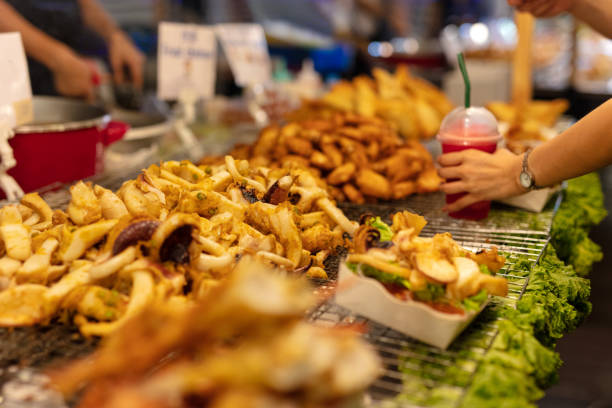
I used to think fine dining was the peak food experience. You know, the dim lights, tiny portions placed in the middle of a giant plate, and a waiter explaining the “concept” of your dish like it’s an art exhibition. But lately, I’ve noticed something different. More people are lining up at street stalls than booking tables at expensive restaurants. And honestly… I kind of get it.
Street food just feels alive. It’s loud, messy, chaotic sometimes. But it’s real. While fine dining is about perfection and presentation, street food is about flavor that hits you straight away. No filter. No performance. Just taste.
If you scroll through Instagram or even reels on Facebook, you’ll see it. Instead of five-star plated desserts, people are sharing videos of spicy pani puri explosions, overloaded shawarmas, or sizzling noodles being tossed in big iron woks. The comments are always like, “This looks better than any 5-star hotel food.” And I don’t think they’re joking.
Money Talks, and It’s Hungry
Let’s be honest, money plays a big role here. Fine dining is expensive. Sometimes you pay more for the ambience than the food itself. I once paid almost the price of my weekly grocery bill for a tasting menu, and I left… still kind of hungry. That was painful.
Street food, on the other hand, feels like a smart deal. For the price of one fancy starter, you can try three or four different dishes at a street market. It’s like comparing buying one designer shirt versus grabbing five trendy ones from a local market. One looks classy, sure. But the other gives you more fun for your money.
There’s also a psychological thing here. When times feel uncertain financially, people naturally shift toward affordable indulgences. Economists sometimes call this the “lipstick effect,” where people buy small luxuries instead of big ones during tough times. In food terms, street food becomes that little treat. You’re not booking a ₹5000 dinner, but you’ll happily spend ₹200 on something spicy and comforting.
Flavor Over Formality
Fine dining focuses a lot on technique and innovation. And that’s impressive, I won’t deny it. Restaurants inspired by chefs like Gordon Ramsay or Massimo Bottura have changed global cuisine in serious ways. But sometimes innovation feels… forced? Like deconstructed samosa foam. Why.
Street food doesn’t try that hard. It’s built on tradition, passed down recipes, and bold flavors. A street vendor isn’t worried about Michelin stars. They’re worried about making sure that chutney tastes exactly how customers remember it.
There’s also this lesser-known stat I read in a food industry report that nearly 70 percent of urban millennials prefer casual dining or street-style food over formal restaurants at least twice a week. I don’t know if that number is exact now, but the trend feels real. People want authenticity. Not performance.
The Social Media Effect Is Huge
Street food looks dramatic. Flames shooting up from a tawa. Cheese being pulled in slow motion. Sauce being poured in satisfying swirls. It’s made for short-form video content. Platforms like Instagram and TikTok basically turned street vendors into mini celebrities.
There are entire YouTube channels dedicated to street food tours. Some vendors in cities like Delhi or Bangkok have millions of views online. That kind of exposure changes everything. A small cart can become a tourist attraction.
Fine dining doesn’t always translate as well on camera. It’s quiet. Subtle. You need to be there physically to “feel” it. But street food? It screams through the screen.
Experience Over Elegance
Something I personally noticed is that street food feels more social. You’re standing next to strangers, sharing tables, laughing when someone drops chutney on their shirt. There’s energy in the air. It feels less intimidating.
Fine dining can feel stiff sometimes. I always worry about using the wrong fork. Or mispronouncing the dish name. Or spilling something on a white tablecloth and silently panicking.
Street food removes that pressure. Nobody cares if sauce drips down your hand. That’s part of it.
And maybe that’s why Gen Z seems especially into it. Online conversations often show people saying things like “I don’t want luxury, I want vibe.” That vibe is easier to find at a crowded food market than in a quiet candle-lit restaurant.
Trust and Transparency
This part is interesting. Many people assume street food is less hygienic. And yes, that can be true in some cases. But modern street vendors are adapting. Gloves, filtered water, QR payments, social media reviews. Some even show their whole cooking process live.
Ironically, transparency builds trust. You see your food being made right in front of you. In fine dining, everything happens behind closed kitchen doors.
There’s also growing support for local businesses. People like the idea that their money is going directly to a family-run stall rather than a big hospitality group. It feels personal.
It’s Not About Replacing Fine Dining
I don’t think fine dining is dying. It still has its place. Anniversaries, celebrations, business meetings. Sometimes you want that calm environment and artistic presentation.
But street food fits daily life better. It’s quick. Affordable. Exciting. It adapts fast to trends. If something goes viral online, a street vendor can start selling it next week. A fine dining restaurant might take months to update a menu.
Food culture keeps evolving. Right now, people want connection, bold flavors, and value. Street food gives that in a simple paper plate.
Maybe it’s not about better or worse. Maybe it’s about what feels right for this generation. And honestly, sometimes a spicy, slightly messy plate eaten on the side of the road just hits different than a perfectly plated masterpiece under dim lighting.
And if I have to choose between a tiny artistic portion or a hot, overflowing plate that costs one-tenth the price… I think I know where I’m standing. Probably next to a food cart, wiping sauce off my hands and pretending I’m not going back for seconds.